


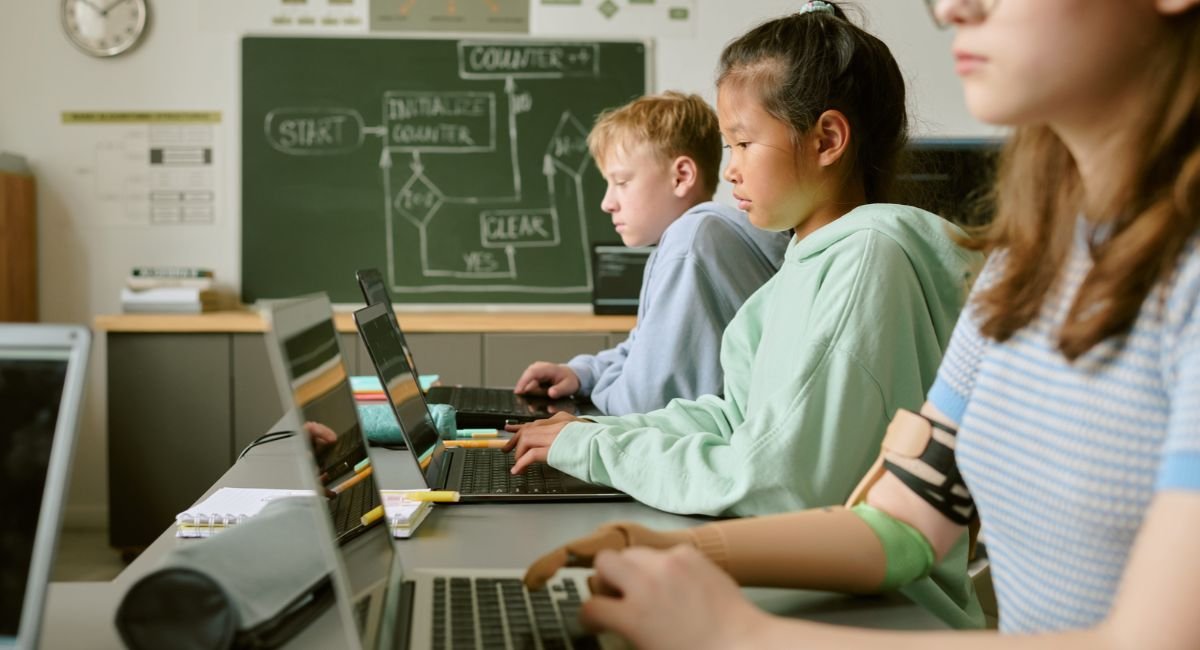
TECHNOLOGY IN EDUCATION
Technology in education means using digital tools, devices and online resources to make teaching more easier, more effective and more interesting
Technology improves include tools such as computer, smartphone,projectors, educational app and online learning platforms. Teachers use these tools to explain lesson, share study materials and communicate with students, Students use them to research topics, attends online classes and complete assignments and improve their knowledge. Technology improves the learning
For example:A teacher can use a projectors to show a science animation instead of only explaining the topic.
1. Makes Learning More Interesting
Traditional classroom teaching can sometimes feel difficult, especially when students have to understand complicated topics through written explanations alone.
Technology improves brings lessons to life through videos, animations, presentations, and educational games. For example, a science student can watch an animation of the human heart to understand how blood circulates through the body.
These visual learning methods help students stay interested and make difficult concepts easier to remember.
Types of Educational Technology Tools with Examples
Educational technology improves tools are digital applications, websites, and software that help teachers teach and students learn more effectively. These tools make education interactive, organised, and easier to access. Different tools are designed for different educational purposes.
1. Online Learning Tools
Online learning tools are websites and applications that allow students to study through the internet. Students can watch video lectures, read digital books, complete courses, and learn new skills from home.
Examples:
- Google Classroom: Teachers can share lessons, assignments, and study materials with students.
- Khan Academy: Provides free video lessons and practice exercises for subjects like mathematics and science.
- Coursera: Offers online courses to help students learn different academic and professional skills.
- Udemy: Provides courses on topics such as computer skills, graphic design, and programming.
- “Technology can become the “wings” that will allow the educational world to fly farther and faster than ever before – if we allow it
2. Online Meeting Tools
Online meeting tools allow teachers and students to communicate through live video and audio calls. They are especially useful for online classes, group discussions, presentations, and virtual meetings.Technology improves the online meeting tools
Examples:
- Zoom: Teachers can conduct live classes, share their screens, and explain lessons.
- Google Meet: Allows teachers and students to join online meetings using a link.
- Microsoft Teams: Supports video meetings, group communication, and file sharing.

3.Technology improves Quiz and Educational Gaming Tools
Quiz and gaming tools make learning enjoyable through questions, competitions, points, and educational games. They help students test their knowledge and remember important information.
Examples:
- Kahoot!: Teachers create fun quizzes, and students answer questions during classroom activities.
- Quizizz: Students participate in interactive quizzes and practise different subjects.
- Wordwall: Teachers create matching games, word searches, and other learning activities.
- Blooket: Combines educational questions with game-based activities to make learning more engaging.
4. Classroom Management Tools
Classroom management tools help teachers organise classroom activities, manage assignments, track student progress, and communicate with students. These tools make it easier to handle daily educational tasks.
Examples:
- Google Classroom: Teachers can create classes, distribute assignments, check submitted work, and provide feedback.
- ClassDojo: Helps teachers communicate with parents and encourage positive classroom behaviour.
- Moodle: Allows educational institutions to manage courses, assignments, learning materials, and student progress.
- Schoology: Helps teachers organise lessons, manage coursework, and communicate with students.
“A DIGITAL CLASSROOM OPENS THE DOORS TO ENDLESS OPORUNITY”
5.Technology improves Digital Collaboration Tools
Digital collaboration tools allow students and teachers to work together on projects, share ideas, and edit documents online. Students can complete group assignments even when they aren’t sitting in the same classroom.
Examples:
- Google Docs: Multiple students can write and edit the same document.
- Google Slides: Students can create presentations and work together on projects
- Padlet: Allows students to share ideas, images, links, and notes on a digital board.
Technology is not just changing classrooms; it’s changing the way students think, learn, and discover new possibilities.”
Develops Digital Skills for Future Careers
Education isn’t only about passing examinations. Students also need practical skills that can help them in higher education and professional life.
Using digital tools helps students become familiar with modern technology.
Some useful digital skills include:
- Creating documents using Microsoft Word.
- Preparing presentations using PowerPoint
- Organising data using spreadsheets.
- Communicating through professional email.
- Using online platforms for research and learning.
These skills can be useful in many fields, including business, education, computer science, and digital marketing.
“TECHNOLOGY SKILLS ARE NOT LONGER OPTIONAL, THERE ARE AN IMPORTANT PART OF CARRER GROWTH”
Challenges of Using Technology in Education
Although technology offers many educational benefits, it also creates a few challenges.
1. Online Distractions
Social media, games, and entertainment websites can distract students during study time. Setting a proper study schedule can help them stay focused.
2. Internet and Device Problems
Some students don’t have reliable internet connections or personal computers. This makes accessing online education difficult.
3. Too Much Screen Time
Spending long periods using digital devices can cause eye strain and affect daily routines. Students should take regular breaks and balance screen-based learning with other activities.
4. Overdependence on Technology
Some students rely too heavily on online answers and digital tools. They should continue practising independent thinking, writing, and problem-solving.
The best approach is to combine traditional classroom teaching with useful digital resources.

Benefits of Technology improves Education
Technology has become an important part of modern education. It has changed the way teachers teach and students learn. In the past, students mostly depended on textbooks, classroom lectures, and handwritten notes. Today, they can use computers, smartphones, educational websites, and online applications to improve their knowledge. These digital tools make learning more flexible, interesting, and accessible.
The benefits of technology in education go beyond simply making lessons easier. Technology helps students develop new skills, communicate with teachers, explore different subjects, and prepare for future careers. Here are some important benefits.
1. Technology improves Learning Easier and More Interesting
One of the biggest advantages of technology is that it makes lessons more engaging. Students can understand difficult topics through educational videos, animations, pictures, and interactive presentations.
For example, a science student can watch an animation of the solar system instead of only reading about planets in a textbook. This visual explanation makes the lesson easier to understand and remember.
3. Supports Online and Flexible Learning
Online learning platforms allow students to attend classes from home or other suitable locations. This is especially helpful for students who cannot regularly attend physical classrooms.
Applications such as Zoom and Google Meet make virtual classes possible. Students can listen to lectures, ask questions, and participate in discussions through the internet.
They can also review recorded lessons whenever they need help understanding a particular topic.Technology improves flexible learning
4. Improves Communication Between Teachers and Students
Good communication helps students perform better in their studies. Technology makes it easier for teachers and students to stay connected outside the classroom.
Teachers can share announcements, assignments, notes, and feedback through platforms such as Google Classroom and Microsoft Teams.
Students can ask questions, discuss difficult topics, and receive guidance without waiting for the next class.
6. Develops Digital Skills for Future Careers
Modern workplaces use computers, digital platforms, and online communication tools in many professional activities. Students who become familiar with these technologies during their education can prepare themselves for future opportunities.
They can learn useful skills such as:
- Creating documents using Microsoft Word.
- Preparing presentations using PowerPoint.
- Organising information in spreadsheets.
- Communicating through professional emails.
- Conducting online research.
- Using digital platforms for teamwork.
These skills can help students in higher education and different career fields.
8. Technology improves Supports Different Learning Styles
Every student has a different way of understanding information. Some prefer reading books, while others learn better through videos, pictures, or practical activities.
Technology provides different learning methods to support these needs.
For example, a student who struggles with mathematics can watch video explanations, practise questions using educational applications, and review digital notes.
This flexibility helps students learn at a comfortable pace.
9.Technology improve Saves Time and Improves Organisation
Technology helps students and teachers manage their educational activities more efficiently.
Students can organise digital notes, prepare assignments, create presentations, and manage deadlines using different applications.
Teachers can distribute learning materials online, collect assignments, and track student progress without handling everything manually.
As a result, both teachers and students can spend more time focusing on learning.
Conclusion
Technology has changed the way students learn and teachers share knowledge. From online classes and educational videos to interactive quizzes and classroom management platforms, digital tools offer many opportunities to make education more engaging and accessible
Still, technology improves cannot replace good teachers, personal effort, or practical experience. When students use it wisely and maintain a healthy balance, it can make their educational journey more productive and enjoyable.Technology improves new and easy way of learning
Frequently Asked Questions (FAQs)
1. How does technology improve the learning experience for students?
Technology makes learning more interactive through educational videos, online classes, digital resources, and practice applications. It also allows students to learn at their own pace.
2. What are the most useful educational technology tools?
Some popular tools include Google Classroom, Zoom, Khan Academy, Kahoot!, Quizizz, Moodle, and Google Docs. Each tool supports a different part of the learning process.
3. What are the benefits of technology in education?
Technology provides easy access to information, supports flexible learning, improves communication, encourages independent study, and develops digital skills.
4. Can technology make classroom learning more interesting?
Yes. Teachers can use videos, animations, smartboards, online quizzes, and educational games to make lessons more interactive and enjoyable.
5. What are the disadvantages of technology in education?
Common challenges include online distractions, limited internet access, excessive screen time, and overdependence on digital tools.
6. Can students learn independently with technology?
Yes. Students can use online courses, educational websites, digital libraries, and video tutorials to explore subjects and practise new skills independently.
7. Will technology replace teachers in the future?
Technology can support teachers, but it cannot fully replace their guidance, experience, personal feedback, and ability to understand students’ individual needs.
