


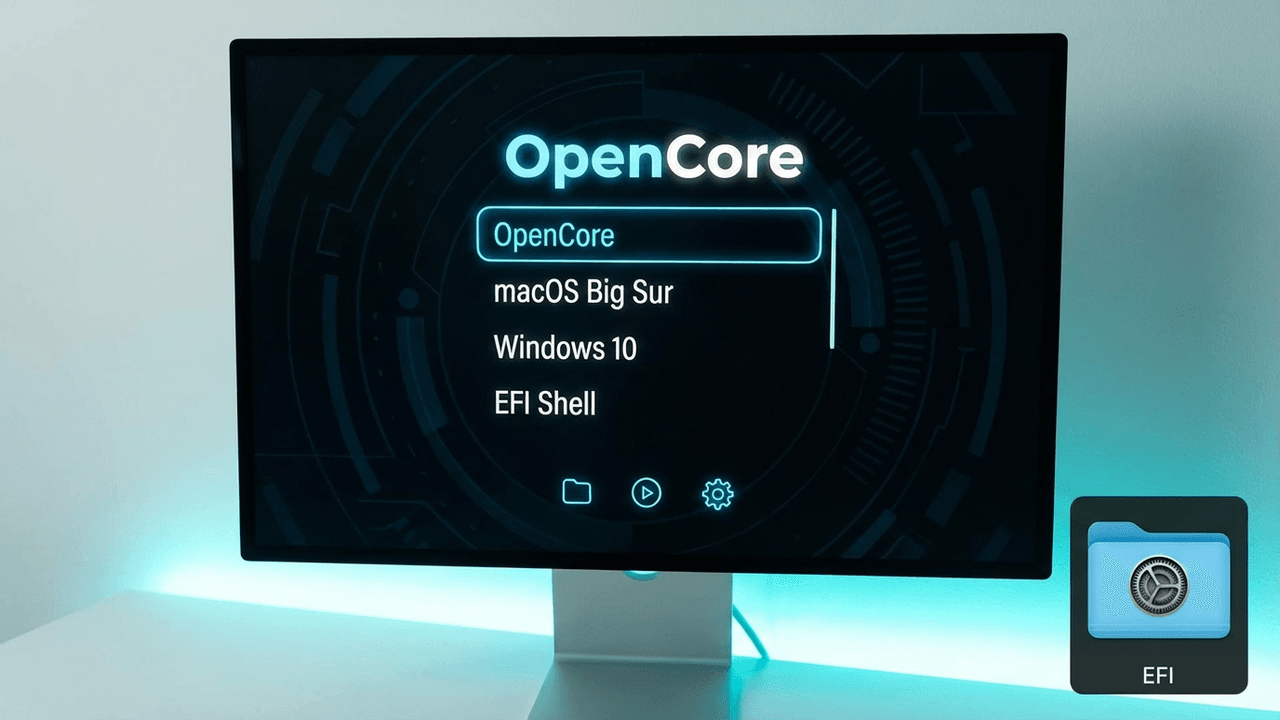
Anyone who has spent time building a Hackintosh knows the drill. You tweak one setting, hold your breath, reboot… and hope the macOS gods are smiling. And sooner or later, everyone stumbles across OpenCore Configurator, especially the widely searched version: OpenCore Configurator 2.76 1.0 download.
If you’re here, you’re probably trying to figure out:
- What this tool actually does
- Whether this version is safe
- How to get it without downloading something sketchy
- How it fits into the bigger Hackintosh world
- And how to use it without breaking macOS, your EFI, or your sanity
So let’s walk through this with the calm, conversational honesty you’d expect from someone who’s been elbow-deep in EFI folders at 3 AM more times than they’d like to admit.
This isn’t a robotic rundown. Just a clear, natural-flow explanation of what matters, why it matters, and how to use OpenCore Configurator responsibly.
Why People Still Search for “OpenCore Configurator 2.76 1.0 Download”
There’s a reason older versions of tools stay popular. Sometimes newer builds break compatibility. Sometimes people just feel safer with what worked before. And sometimes—you know this too—the Hackintosh community moves fast and old configurations don’t always play nice with new interfaces.
Version 2.76 1.0 is one of those builds a lot of users got comfortable with.
But here’s the thing:
OpenCore changes constantly. And the Configurator tool is not officially part of the OpenCore development team. It’s a convenient editor… but not the “blessed” way to edit your config.plist.
This version sticks around because:
- It supported certain OpenCore releases many people built stable systems on
- It worked smoothly with specific macOS builds
- It had an interface some preferred before later redesigns
- It didn’t aggressively auto-update or break layouts as newer versions sometimes do
If you’ve ever had your config.plist scrambled by a mismatched editor, you know how precious compatibility truly is.
Let’s Clear Something Up About Downloading OpenCore Tools
A lot of new Hackintosh users download tools without thinking twice. But when you search “OpenCore Configurator 2.76 1.0 download,” you’ll find dozens of random websites offering it.
Let’s be real:
Half of them shouldn’t be trusted.
Whenever you download Hackintosh tools, the safest mindset is:
- Never trust mirrored downloads
- Never trust unknown file hosts
- Never trust “patched” or “modified” versions
- Always prefer the developer’s official distribution channels
Why?
Because EFI tools interact directly with bootloaders. A compromised bootloader is like handing your system’s master key to a stranger.
So throughout this guide, I’ll focus on safe usage, clean practices, and how to avoid nasty surprises.
What OpenCore Configurator Actually Does (In Plain English)
OpenCore Configurator is basically a visual editor for OpenCore’s config.plist. Instead of manually editing an XML document line-by-line, the tool organizes everything into tabs, checkboxes, and drop-downs.
You get to tweak:
- ACPI
- Booter
- DeviceProperties
- Kernel
- Misc
- NVRAM
- PlatformInfo
- UEFI
No digging through text, no worrying about indentation, no wondering if a single typo will destroy your boot process.
It’s like switching from writing website code in Notepad to using a proper visual editor. Not necessary… but often helpful.
Why Some Users Love Version 2.76 1.0 Specifically
Tools age like wine—or milk. OpenCore Configurator versions are no different. Some releases feel buttery smooth, stable, predictable. Others feel like you’re playing config-roulette.
Version 2.76 1.0 sticks in memory because:
1. It supported OpenCore versions many used for macOS Catalina + Big Sur installs
Those were big Hackintosh years. Giant waves of users arrived. This version happened to “just work” for many builds.
2. The layout was clean and predictable
Later updates moved stuff around. Not everyone liked that.
3. It didn’t force updates or rewrite sections unexpectedly
A known frustration with later releases.
4. Hackintosh forums used to link to it all the time
Once something becomes the “go-to,” it stays that way for a while.
5. It was stable on both Intel and AMD setups
Not all versions can say that.
The Honest Truth: Should You Still Use OpenCore Configurator?
Let’s be completely transparent.
OpenCore Configurator is convenient. But the OpenCore developers themselves recommend using ProperTree or editing manually. Their reasoning is simple:
- OpenCore updates fast
- Configurator sometimes lags behind
- Older versions may break compatibility with newer OpenCore releases
- Visual editors can unintentionally modify unseen fields
But…
If you are working on an older EFI folder and you know exactly which OpenCore version it matches, the right Configurator version can make your workflow faster and more comfortable.
Just don’t mix versions. Ever.
A Quick Story That Perfectly Explains Why Version Matching Matters
One Hackintosh user—let’s call him Daniel—had a rock-solid Catalina build. Seriously, flawless. He wanted to upgrade a kext, so he opened his config.plist in a newer Configurator.
Everything looked okay. He saved it. Rebooted.
Boom. No boot. No recovery. No fallback.
Why?
The new editor wrote config entries using a structure that didn’t exist when his original version of OpenCore was built.
Moral of the story?
Always use a matching editor for your OpenCore version.
This is exactly why older builds like OpenCore Configurator 2.76 1.0 remain popular. They match many stable EFI setups from that era.
If You’re Still Looking for the 2.76 1.0 Version, Keep This in Mind
The goal isn’t just to “download it.”
It’s to download it safely, use it intentionally, and avoid corrupting your system.
Whenever you use any OpenCore editing tool:
- Work on a backup
- Duplicate your EFI
- Save original configs
- Confirm version compatibility
- Disable auto-updates within the tool
A corrupted config.plist is like deleting the blueprint to your house.
How OpenCore Configurator Compares to Other Tools
Let’s be honest for a moment. The Hackintosh world is filled with tools. Some great. Some questionable. Some abandoned. Some magical.
Here’s how OpenCore Configurator stacks up:
OpenCore Configurator vs ProperTree
OpenCore Configurator
- Visual
- Easy for beginners
- Faster for quick edits
- Can cause issues if version mismatched
ProperTree
- 100% recommended by official OpenCore devs
- Cannot corrupt configs due to mismatched layouts
- Python-based, lightweight
- Not as “pretty,” but extremely reliable
If reliability is your top priority?
ProperTree wins.
If convenience is your top priority and you know your versions?
Configurator is fine.
OpenCore Configurator vs Xcode
Yes, some users actually use Xcode for editing plist files.
Xcode is:
- Stable
- Clean
- Zero risk of breaking formatting
But:
- It’s not aware of OpenCore structure
- It won’t help you with missing keys
- It doesn’t simplify the process
So it’s more “manual screwdriver” than “EFI multi-tool.”
OpenCore Configurator vs PlistEdit Pro
PlistEdit Pro is a favorite among Hackintosh old-timers.
Great for:
- Manual tweaks
- Diving deep into the plist
- Lightweight editing
But again, completely unaware of OpenCore-specific fields.
If You Do Download OpenCore Configurator, Here’s the Safest Way to Use It
1. Always keep an untouched backup of your working EFI
Think of it as your emergency parachute.
2. Only edit one section at a time
If something breaks, you’ll know where to look.
3. Validate your config through OCValidate
It’s included in OpenCore releases.
4. Avoid random YouTube “EFI downloads”
Half of them break on the first update.
5. Use matching versions
This can’t be stressed enough.
6. Never mix OC 0.6+ configs with older tools
Instant corruption risk.
Understanding the Real Purpose of OpenCore Configurator
OpenCore Configurator isn’t meant to replace learning OpenCore. It helps you work faster, not smarter. The real strength of a Hackintosh is understanding your build:
- Your motherboard
- Your CPU
- Your GPU
- Your SMBIOS choice
- Your kext load order
- Your ACPI patches
Configurator won’t magically fix an incompatible system. It just arranges things neatly. The real power lies in your understanding.
Frequently Asked Questions
1. Is OpenCore Configurator 2.76 1.0 still safe?
It’s safe if downloaded from trusted sources and used with matching OpenCore versions. Avoid random mirrors.
2. Can I use this version with newer OpenCore releases?
Not recommended. Use the Configurator version that matches your OpenCore release notes.
3. Does using Configurator void anything?
No, but it can break your EFI if misused.
4. Why not just edit the config manually?
You can. Many prefer it. But beginners enjoy the visual layout.
5. Will this version work with macOS Monterey, Ventura, or Sonoma?
Only if your OpenCore version matches and your EFI is built correctly.
6. Do professionals use OpenCore Configurator?
Some do. Many prefer ProperTree. Real experts know both.
7. Why do people still seek older releases?
Compatibility. Stability. Familiarity.
8. Can this corrupt my config file?
If version-mismatched, yes. Always back up.
Final Thoughts
The search for OpenCore Configurator 2.76 1.0 download usually happens for one reason: people want a version that works with their older, trusted EFI setups. And that makes sense. Hackintosh builds thrive on consistency.
This tool—used carefully—can make life easier. But like all powerful tools, it demands respect. Work slowly. Understand your system. Back up constantly. And remember: a stable Hackintosh comes from knowledge, not just software.
