


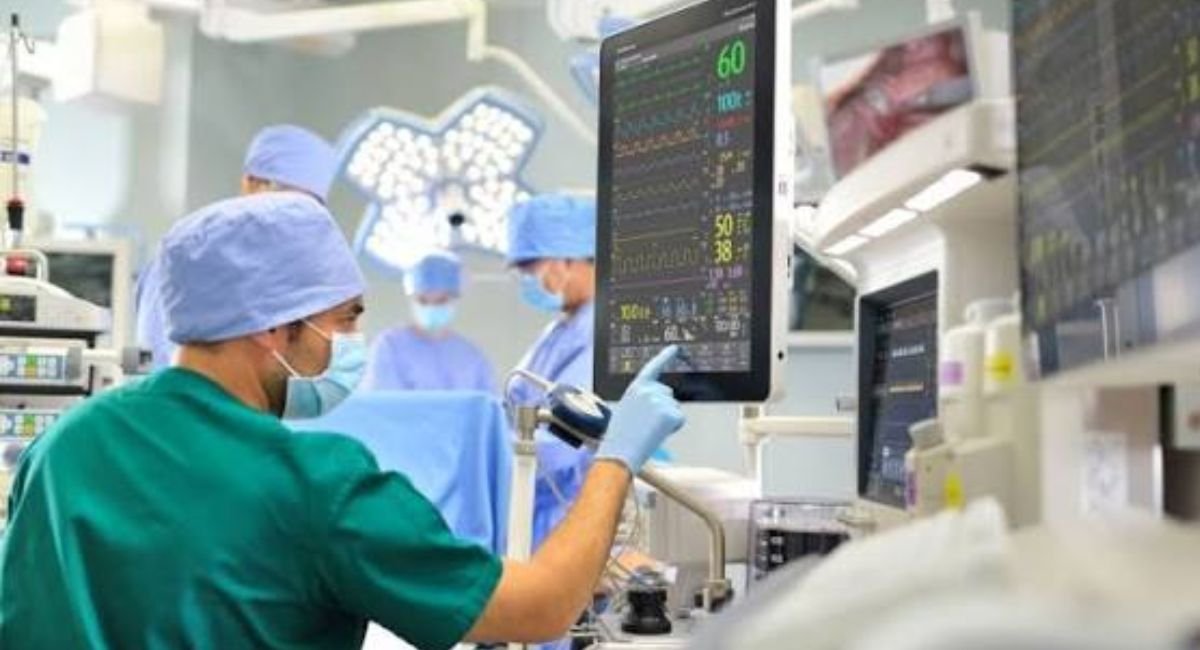
Have you ever visited a hospital and noticed how quickly doctors can check a patient’s condition, examine medical reports, or perform different tests? Behind these everyday activities, there’s a wide range of modern technology helping medical professionals do their jobs.Hospitals are no longer dependent on paper records and traditional medical equipment alone. Let’s look at 10 important technology used in hospitals and understand how they work in everyday healthcare.
Why Do Hospitals Need Modern Technology?
Managing a hospital isn’t an easy job. Doctors examine patients, nurses monitor their health, laboratories perform tests, and administrative staff handle appointments and records.
Without proper equipment and digital systems, these responsibilities can become difficult to manage.
Modern technology used help hospitals:
- Examine patients more accurately.
- Maintain digital medical records.
- Monitor important health measurements.
- Improve communication between departments.
- Organize appointments and hospital services.
- Support doctors during medical procedures.
Technology used doesn’t replace medical professionals. Instead, it gives them useful tools to provide appropriate care.
10 Technologies Commonly Used in Hospitals
1. Electronic Health Records (EHR)
Electronic Health Records are digital systems used to store patient information. They replace many traditional paper-based medical files.
Doctors can use these records to review a patient’s medical history, previous diagnoses, allergies, prescriptions, and laboratory results.
For example, when a patient visits a hospital for a follow-up appointment, the doctor can review previous reports without searching through several paper files.
2. X-Ray Machines
X-ray machines are commonly used in hospitals to examine bones and certain internal structures.
They help doctors identify fractures, joint problems, and some chest conditions. For example, if someone experiences an injury after falling, an X-ray can help determine whether a bone has been damaged.
3. MRI Machines
Magnetic Resonance Imaging (MRI) is an advanced scanning technology that uses strong magnetic fields and radio waves to produce detailed images of internal body structures.
Doctors use MRI scans to examine the brain, spinal cord, muscles, joints, and other body parts.
Unlike conventional X-rays, MRI doesn’t use ionizing radiation. It’s particularly useful when doctors need detailed information about soft tissues.
4. CT Scanners
Computed Tomography (CT) scanners combine X-ray technology with computer processing to create detailed images of the body.
They are frequently used in emergency departments to investigate injuries and certain internal medical conditions.
A CT scan allows doctors to examine different sections of the body and collect information that may not be available through a regular X-ray.
5. Robotic Surgery Systems
Robotic surgery systems are used in certain medical procedures to support surgeons.
These systems provide specialized instruments and advanced viewing technology that surgeons control during operations.
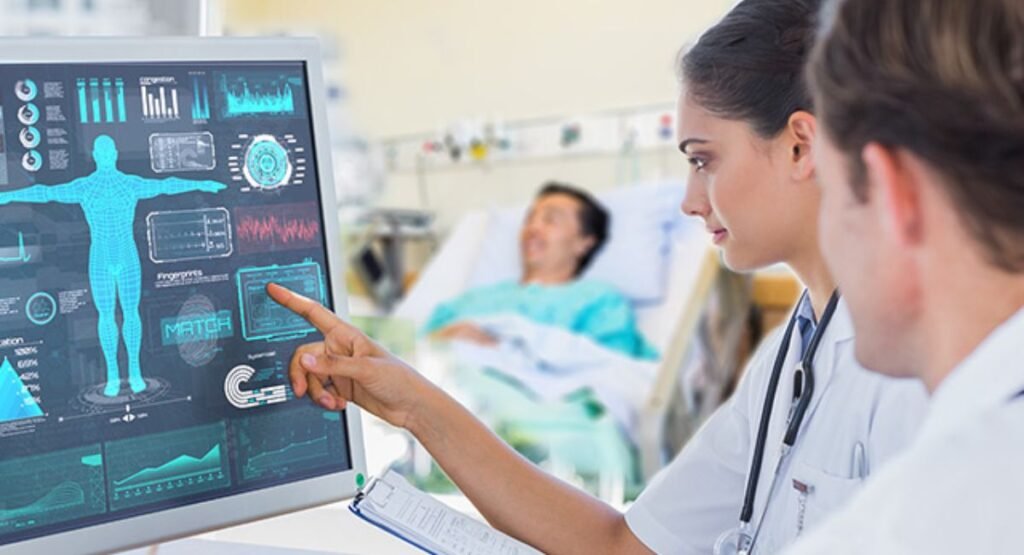
6. Artificial Intelligence (AI)
Artificial intelligence is becoming an important part of healthcare technology used.
Hospitals can use AI-powered software to analyze medical images, identify patterns in patient information, and support certain clinical decisions.
For example, AI tools can help radiologists highlight areas of medical images that may require further examination.
Still, AI doesn’t replace doctors. Medical professionals must review the results and make decisions based on their knowledge and the patient’s condition.
7. Patient Monitoring Systems
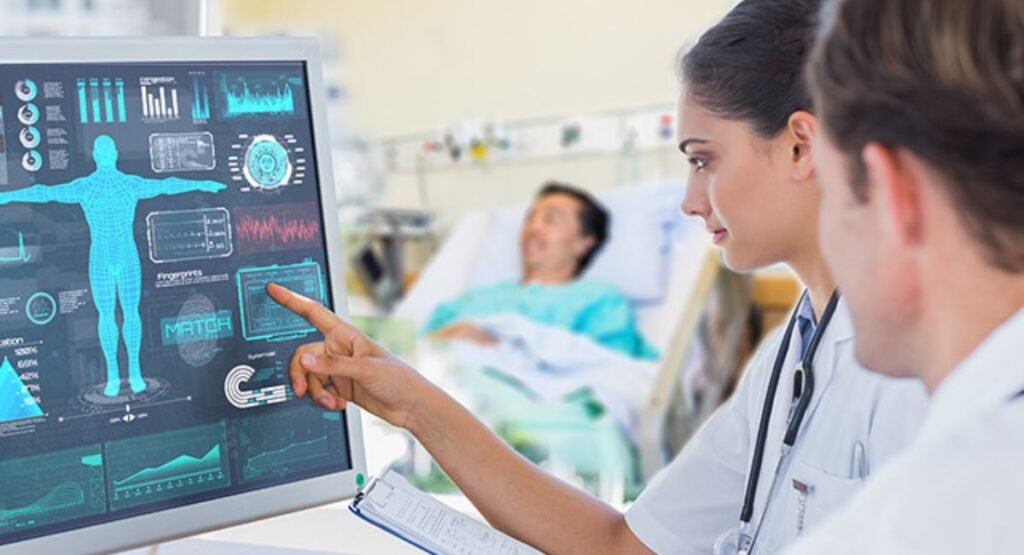
Patient monitoring systems help healthcare professionals observe important health measurements.
These devices are especially useful in intensive care units and emergency departments.
They can monitor:
- Heart rate
- Blood pressure
- Oxygen saturation
- Body temperature
- Breathing rate
If a patient’s readings change unexpectedly, monitoring equipment can alert medical staff.
This allows healthcare professionals to assess the patient’s condition and respond when necessary.
8. Telemedicine
Telemedicine allows patients to consult healthcare professionals through digital communication platforms.
Instead of visiting a hospital for every follow-up appointment, patients may communicate with doctors through video calls or secure online services.
This technology is particularly helpful for people living in remote areas or those who have difficulty travelling.
It also makes certain routine consultations more convenient.
9. Laboratory Automation
Hospital laboratories use automated equipment to process and examine different medical samples.
These machines help perform blood tests, analyze samples, and organize laboratory results.
Technology used make it more advance
10. Hospital Management Software
Hospitals need technology for administrative work as well as medical treatment.
Hospital management software helps staff manage appointments, billing, patient registration, inventory, and other daily activities.
For example, reception staff can use digital systems to register patients and organize appointment schedules.
Other Useful Medical Technologies in Hospitals
Apart from these ten examples, hospitals also use several other devices and systems.
Ultrasound Machines
Ultrasound equipment uses sound waves to create images of internal body structures. It’s commonly used during pregnancy and for examining different organs.
Smart Hospital Beds
Some modern beds include electronic adjustment features and monitoring functions that support patient comfort and safety.
Automated Pharmacy Systems
These systems help hospital pharmacies manage medication supplies, organize prescriptions, and track medicine inventory.
Benefits of Technology Use in Healthcare
Modern medical equipment offers several benefits for hospitals and patients.
Better Diagnosis: Imaging machines and laboratory equipment provide useful information that helps doctors investigate medical conditions.
Time Saving: Digital records and automated systems reduce certain repetitive tasks.
Improved Patient Monitoring: Electronic devices help medical staff observe changes in patients’ health.
Better Communication: Connected hospital systems allow departments to share relevant medical information.
Organized Management: Digital software makes appointments, billing, and inventory easier to manage.
Challenges of Using Technology in Hospitals
Despite its benefits, modern healthcare technology also comes with challenges.
- High Costs: Advanced medical machines can be expensive to purchase and maintain.
- Staff Training: Employees need proper training to operate equipment safely.
- Data Privacy: Hospitals must protect confidential patient information.
- Technical Issues: Software problems or equipment failures can interrupt hospital services.
- Regular Maintenance: Medical devices require inspection and servicing to remain reliable.
Hospitals need proper planning to overcome these problems and make the best use of available resources.
What Is the Future of Hospital Technology?
Healthcare technology used is changing rapidly. Hospitals are exploring advanced artificial intelligence, wearable health devices, improved robotic systems, and connected digital platforms.
In the coming years, smart monitoring equipment may help healthcare professionals observe certain patient measurements outside traditional hospital settings.
Conclusion
Technology used has changed the way modern hospitals work. From MRI machines and digital health records to robotic surgery and artificial intelligence, different tools support doctors and nurses in providing healthcare services.
Frequently Asked Questions (FAQs)
1. What technology is most commonly used in hospitals?
Hospitals commonly use electronic health records, X-ray machines, MRI scanners, patient monitoring devices, and laboratory equipment.
2. How does technology used help doctors?
It helps doctors examine medical images, review patient histories, monitor health measurements, and access useful diagnostic information.
3. What is the role of AI in hospitals?
AI can support medical image analysis, identify patterns in health information, and assist healthcare professionals with certain clinical tasks.
4. What machines are used for medical diagnosis?
Common diagnostic machines include X-ray machines, MRI scanners, CT scanners, and ultrasound equipment.
5. How is technology used in hospital management?
Hospitals use management software to organize appointments, billing, patient registration, staff schedules, and medical supplies.
6. Why is technology important in modern healthcare?
It supports medical diagnosis, patient monitoring, communication, record management, and hospital operations.
7. What is the future of medical technology?
Future developments may include advanced robotics, AI-supported diagnostic tools, wearable health devices, and smarter patient monitoring systems.
