

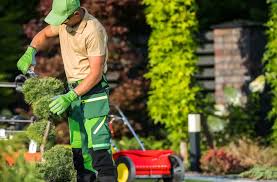
Eco-friendly lawn care services focus on reducing chemical use while maintaining healthy turf growth. Lawn programs can include soil testing, organic-based fertilization options, and alternative weed control products; these help limit reliance on traditional chemicals. Healthier soil enables the grass to have a deeper root and have consistent growth. Here are five eco-friendly lawn care services:
1. Soil Testing and Targeted Treatments
Soil testing measures nutrients like phosphorus, potassium, calcium, and magnesium, along with pH and cation exchange capacity, to show the soil’s current fertility and chemical balance. Lawn care specialists use these results to provide the nutrients plants need; it helps them avoid unnecessary fertilizers that could harm the environment. Test results may show whether pH adjustments will help, as many turf grasses and landscape plants generally grow well in slightly acidic to near-neutral soil.
2. Eco-Friendly Fertilization
A lawn care company develops fertilization plans; these help determine the nutrients needed and where on the lawn to apply them. Programs can differ in the intensity of chemical and environmental focus. One option involves the use of mineral-based granular fertilizers. These fertilizers are applied with calibrated equipment to provide the necessary macronutrients while limiting weed control treatments to specific areas that require them.
Another program option combines organic-based fertilizer with conventional weed control treatments. The fertilizer adds organic matter to the soil while supplying nutrients needed for turf growth. An herbicide-free fertilization program may also be available, providing nutrients without weed-control chemicals. These programs focus on delivering nutrients effectively while limiting chemical applications.
3. Integrated Pest Control
Targeted pest management in a lawn care service includes surface insect control for lawn‑damaging insects such as armyworms, billbugs, chinch bugs, and cutworms. It involves applying insecticide at the appropriate time to improve turf quality and protect grass from insect damage. Grub control attacks larvae that feed on grass roots and can prevent wilting and brown patches when treated early in the season. Flea and tick lawn treatments may also be available, and these help reduce pests near outdoor areas and pets. Non‑synthetic bio‑herbicides and other organic‑minded treatments are offered as alternatives to conventional weed and pest products. They help limit stronger chemical use while managing unwanted plants and bugs.
4. Lawn Aeration and Water Management
Core aeration removes small plugs of soil to relieve compaction and reduce thatch. It also improves access for air, water, and fertilizer to the root zone, promoting deeper roots and stronger turf. Aeration is recommended for lawns with dense soil or thatch issues, and it can be part of a regular maintenance routine.
Watering consistently and adjusting for seasonal conditions allows grass to receive adequate moisture. It promotes consistent growth and enables the nutrients to reach the roots. Keep mower blades sharp and leave grass at a moderate height; this helps the lawn to grow stronger. These practices assist the lawn in retaining water, absorbing nutrients more effectively, and developing healthier roots.
5. Tree and Shrub Care
A multi-point protection program applies scheduled treatments, and this helps protect trees and shrubs from seasonal vulnerabilities. Deep root feeding provides nutrients to the soil surrounding tree and shrub roots. It may enhance nutrient uptake and promote robust root systems and plant health.
Hire an Eco‑Friendly Lawn Care Service
A professional eco‑friendly lawn care service applies targeted treatments and soil-based programs to enhance the growth of healthy grass and plants while minimizing chemical use. Experienced professionals modify the methods of nutrient delivery, pest management, and aeration to preserve soil and plant health. This assists in keeping the root systems strong and enhancing nutrient and water absorption. Contact a qualified service to maintain a sustainable lawn and protect the surrounding ecosystem.
